
Chronology
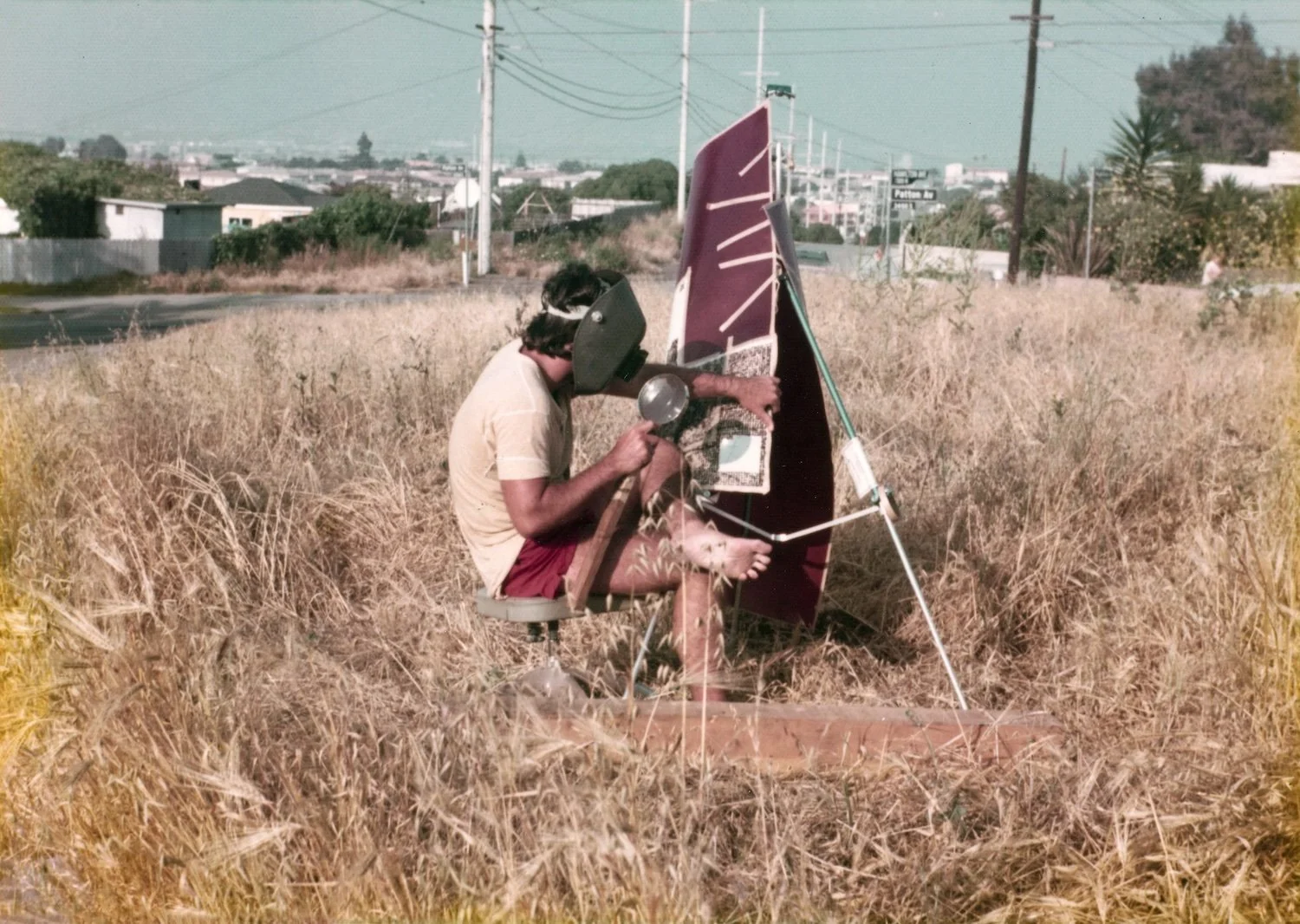
McCafferty solar burning, c. 1972.
“What was to go on the canvas was not a picture but an event.”¹
1940s

1948: San Pedro
Jay McCafferty is born in 1948 and grows up in San Pedro, the port community of Los Angeles, California.
By the 1970s, as a young adult and emerging artist, McCafferty is part of San Pedro’s growing and collaborative art community—attracted by affordable rents, spacious studios, and the area’s diverse coastal environment.
He will evetually be regarded as a prominent West Coast artist, known as the Cabrillo Beach lifeguard who teaches art at Los Angeles Harbor College and lives in one of San Pedro’s most architecturally distinctive homes. He is remembered for his quiet, easygoing, and private demeanor.
1960s
1966: Lifeguarding
From 1966 to 1996, he works part-time as a lifeguard along the beaches of Southern California—a role that deeply influences his artistic sensibility. The rhythms of the ocean and his long hours outdoors foster a contemplative, patient approach that becomes integral to his practice.
This connection will be most evident in his solar burn paintings, where the process relies not only on sitting under the sunlight but also on natural elements such as wind, clouds, time of day, and seasonal changes. As he explains in 1979:
“I am interested in what lies behind nature . . . I barely act as a mediator between the sun and the surface of the painting.”²
Nature will remain central to McCafferty’s life and art. As Melinda Wortz remarks in Artweek in 1979, “McCafferty’s use of nature as a tool is directly linked to the Southern California environment in which he has grown up and chooses to live.”³
1970s
1973: Studies and University of California, Irvine
McCafferty earns a B.A. in Art from California State University, Los Angeles, and in 1973 completes his M.F.A. at the University of California, Irvine (UCI).
UC Irvine’s experimental environment fosters a spirit of critical inquiry and interdisciplinary exploration that helps McCafferty define the direction of his early work and shapes his interest in time and process.
The program attracts an exceptional cohort of faculty and visiting scholars, including Tony DeLap, Craig Kauffman, Ed Moses, Vija Celmins, Bas Jan Ader and John McCracken, as well as prominent art historians and critics including Alan Solomon, Barbara Rose, Philip Leider, and John Coplans.
McCafferty is part of a remarkable group of students who will later emerge as leading artists such as Michael Asher, Christopher Orr, Alexis Smith, Charles Christopher Hill, Chris Burden, Barbara T. Smith, and Maria Nordman.
At UCI, McCafferty develops a strong connection with Tony DeLap, who invites him to serve as his teaching assistant—an experience that sets him on the path to a lifetime of teaching.
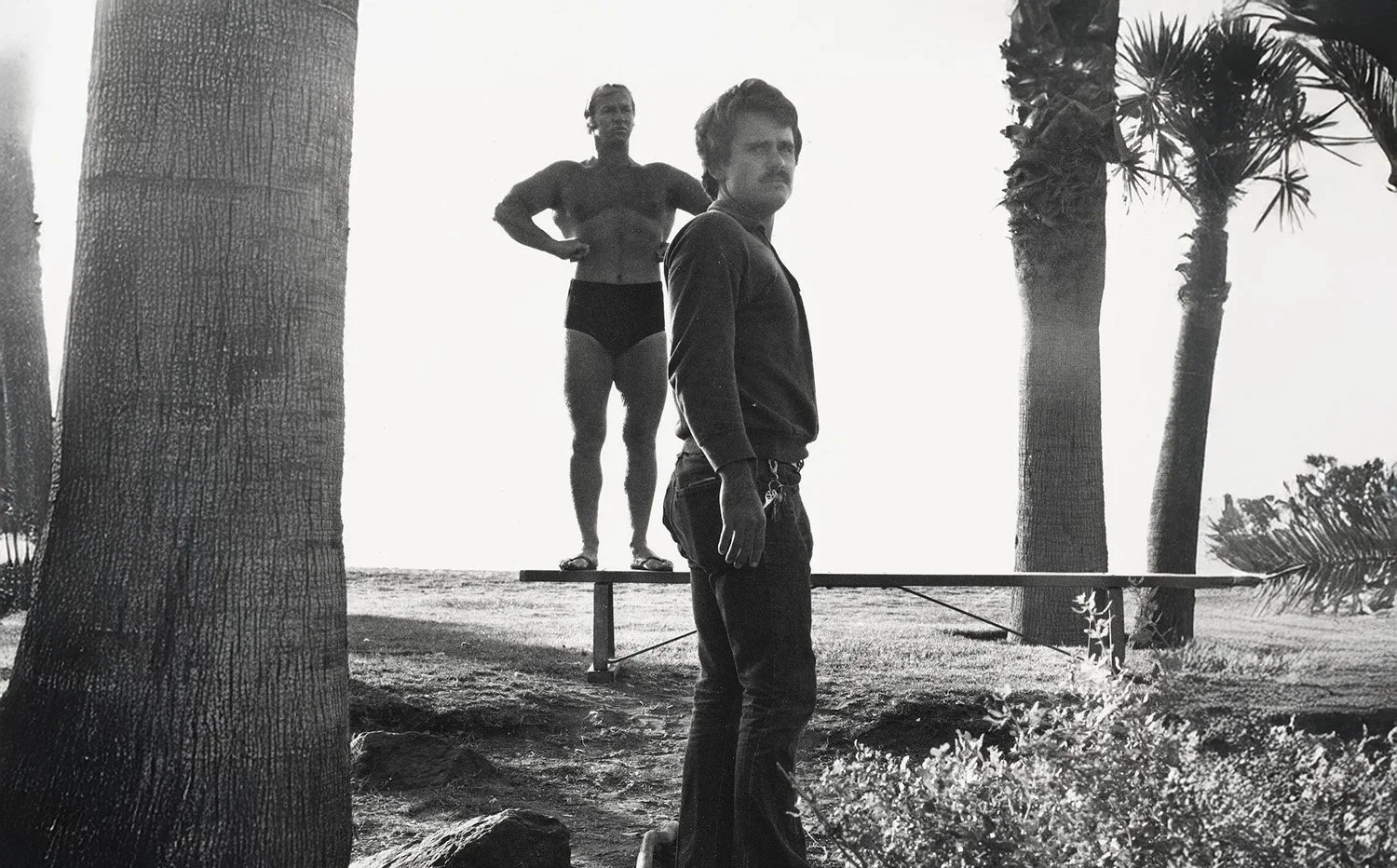
McCafferty with friend John Burich, who appears in the photobook Bicep (1974), Cabrillo Beach, c. 1970s.
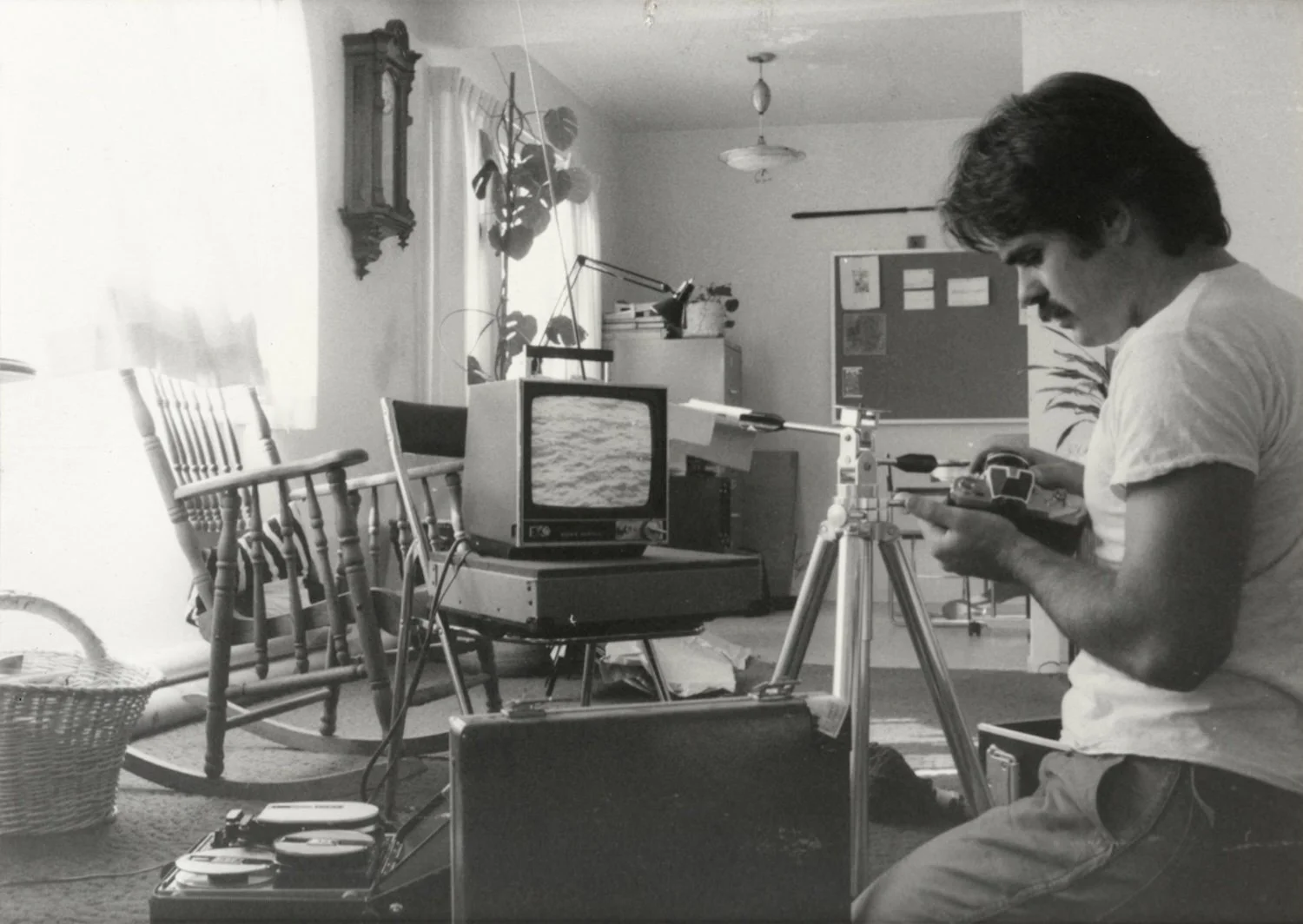
McCafferty at work on video in Harbor City, Los Angeles, 1972.
1972: Video works and the beginning of the Solar Burn Paintings
In 1967, Sony introduces the Portapak, the first portable video recording system. McCafferty purchases a Portapak during his second year at UC Irvine, embracing the emerging new medium.
Among his most notable video works are: Apartment Art (1974), a collection of video recordings of simple and humorous gestures involving ordinary objects, observed over time; Autobiography (1976-1983), a compilation of candid clips of people answering the question, “What do you think of Jay McCafferty?”; and Self-Portrait, Every Year (1972–2021), in which he documents himself shaving in front of a mirror once a year.
At the same time, he begins painting and develops what will become his signature technique: burning holes into paper or other surfaces using sunlight. The solar burn technique marks the beginning of a lifelong practice in which time and process are his primary materials.
McCafferty works from his San Pedro home, dividing his time between indoor and rooftop studios. He prepares his surfaces with grids, rust stains, metallic powders, and pigments. Outdoors, seated for hours under the bright Southern California sun, he burns holes into paper using a magnifying glass to concentrate sunlight.
Sometimes guided by a grid, other times following a more intuitive pattern, the process is slow and meditative, requiring deep focus and presence. For McCafferty, it is both a method and a performance, embedding time into the work’s surface.
1972: Photography
During graduate school, McCafferty begins exploring photography with an experimental approach similar to that of his videos. Using a 35mm camera and a tripod, he takes photographs at regular intervals, to capture the subject as it changes over time.
In 1974, he presents a body of work that includes both videos and photobooks at the Long Beach Museum of Art, Long Beach, California, in the show “Jay McCafferty: Videotapes and Books.”
Each photo book consists of twenty-five transparent pages bearing images on both sides and designed to be browsed like a flipbook. The subjects are drawn from McCafferty’s everyday surroundings—landscapes and ordinary objects, as well as portraits of people from his community, including bodybuilders, lifeguards, and neighbors.
In her review of the show in Artweek, Melinda Wortz writes:
“In McCafferty’s respect for the commonplace, either manufactured or natural, you sense a deep feeling of empathy between the artist and his environment—an identification rather than a control of his surroundings.”⁴
1967-1977: First marriage
In 1967, McCafferty married his first wife, Kathleen Johnson, a fellow student at Chapman University. They participated in the World Afloat study program, traveling by ship, and continued through Europe afterward. Travel remained important throughout McCafferty’s life. Kathleen supported his studies and entry into graduate school. The couple eventually separated and later divorced.
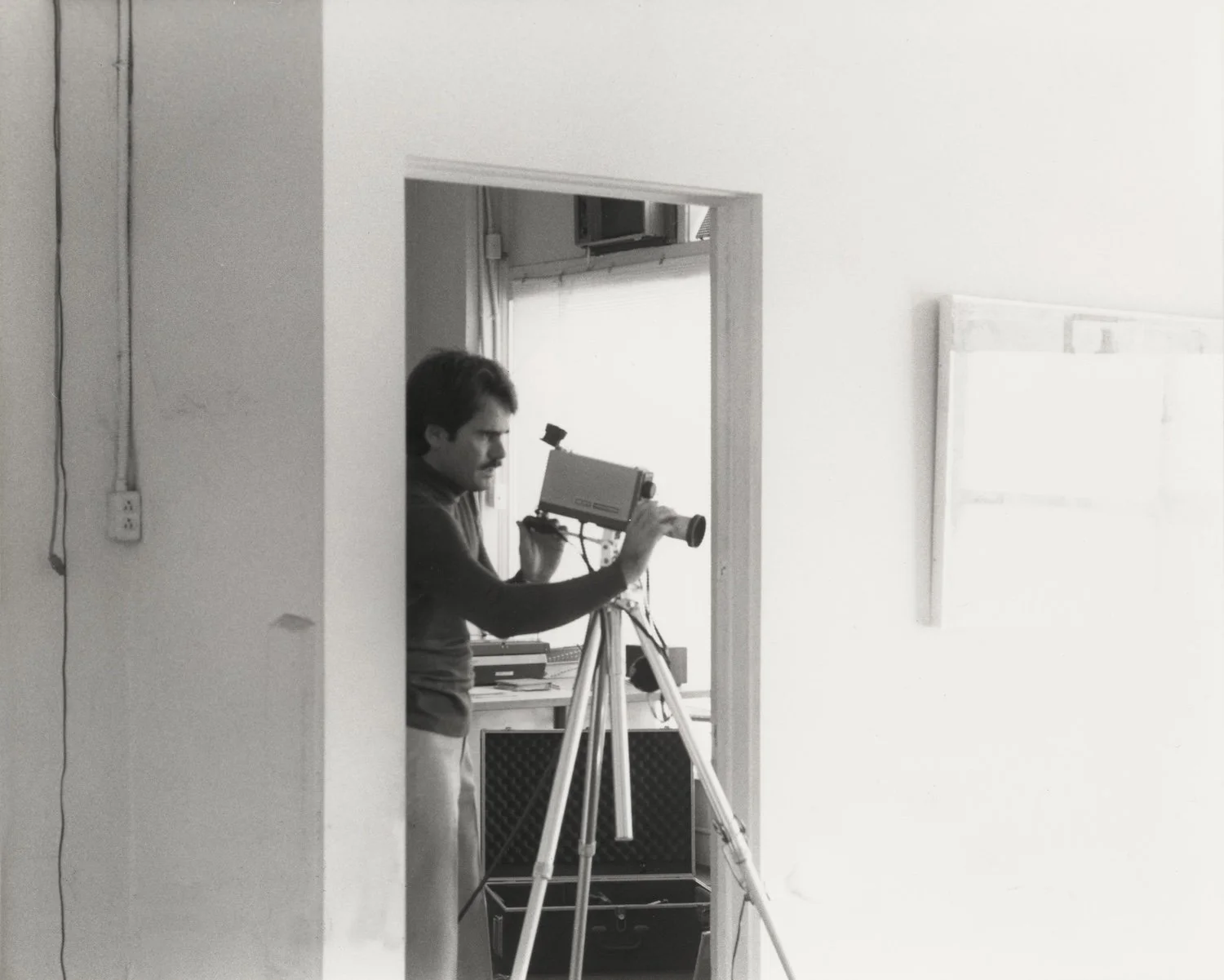
McCafferty with his Portapak, c. 1972.
1974: Trip to the Mediterranean and meeting Ellen
McCafferty joins the World Campus Afloat program for a second semester voyage around the world abroad a ship—this time not as a student but as a newly appointed art teacher at Chapman University in Orange, California, freshly out of graduate school. Onboard, he teaches art classes.
As the ship journeys through South America, Africa, and the Mediterranean, McCafferty documents his travels through photography of people and objects—a body of work that will later be exhibited at Cirrus Gallery in 1977.⁵
During the trip, he meets Ellen Montgomery, a student, who would become his wife in 1980.
Ellen remembers her husband: “He had a strong drive and needed to make art. He woke up every day knowing what he wanted to do. He didn’t have doubts, he was an independent, self-propelled, self-motivated human being.”
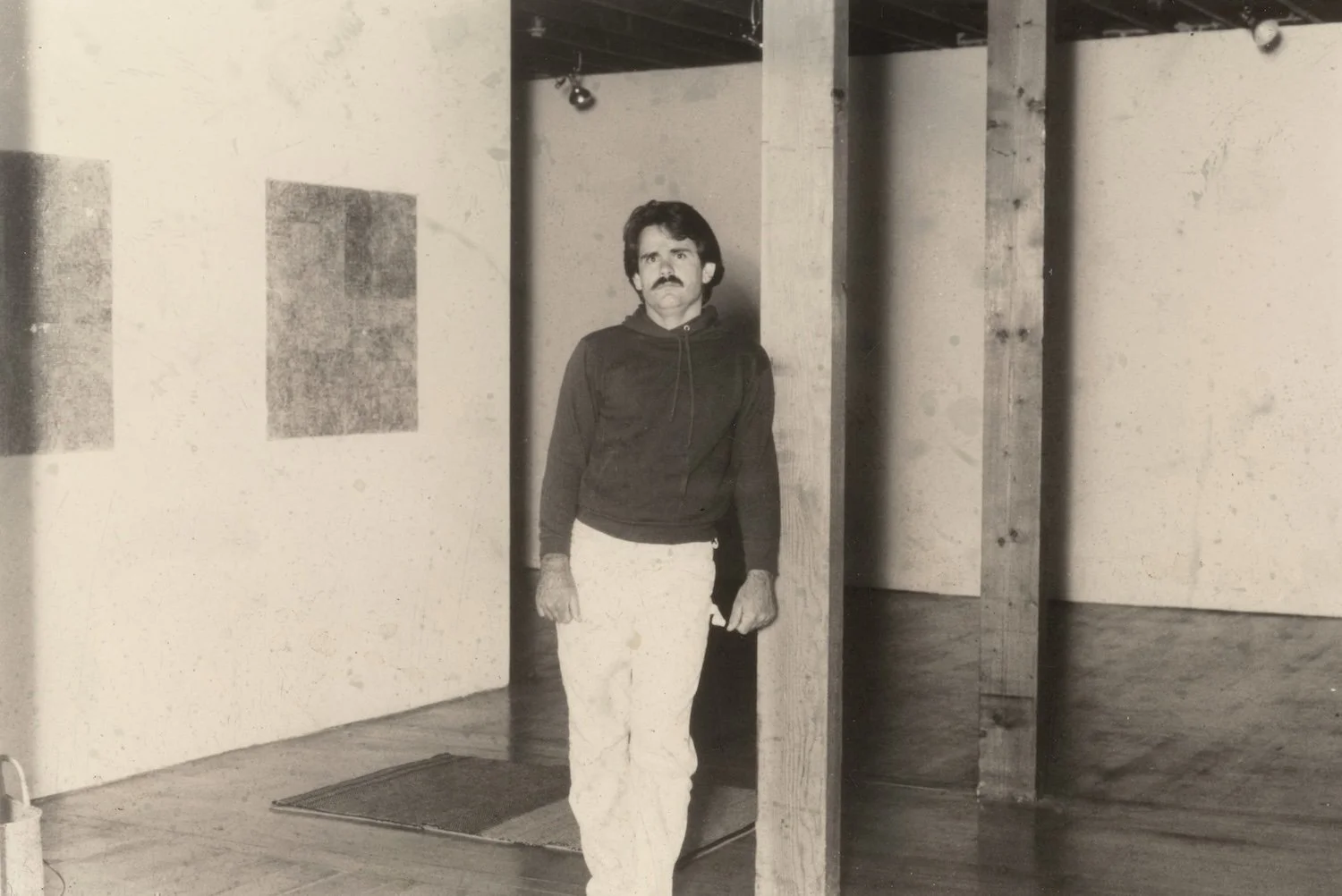
McCafferty in his studio in San Pedro, 1975.
1974–1976: Long Beach Museum of Art
The Long Beach Museum of Art in Long Beach, California, under the leadership of its visionary curator David Ross, is a pioneer in collecting video as an artistic medium. McCafferty develops a long, productive, and significant relationship with the museum that begins early in his career, during a period when his focus is primarily on video art and photography.
In 1974, the Long Beach Museum of Art presents “Jay McCafferty: Videotapes and Books.” Rather than producing a traditional catalog, McCafferty creates two multiples—limited editions of 200 copies each—of the photobooks Stupa and Bicep.
In 1975 and 1976, Ross organizes “1975: Southland Video Anthology Part 1” and ”1976: Southland Video Anthology Part 2,” in which McCafferty exhibits alongside other California artists such as Chris Burden, John Baldessari, Lynda Benglis, Suzanne Lacy, Paul McCarthy, Barbara Smith, Eleanor Antin, Allan Kaprow, Shigeko Kubota, William Leavitt, Bruce Nauman, Nam June Paik, Martha Rosler, Allen Ruppersberg, Allan Sekula, and David Salle.
In the early 1980s, the Long Beach Museum of Art produces the cable television program Shared Realities:
A Cultural Arts Cable Series, which features interviews, art videos, music, and live performances. The series includes many of McCafferty’s video works. Later, in 1984, Kathy Rae Huffman curates for the museum the exhibition “Jay McCafferty: An Edited Ten Years.”
1975: Joining Cirrus Gallery
McCafferty joins Cirrus Gallery in Los Angeles, beginning a long-lasting and prolific relationship that continues throughout his life.
1975: A seminal exhibition at Cirrus Gallery and Phoenix (1975)
McCafferty opens his first solo show at Cirrus Gallery, “Solar Burns.” The exhibition marks the public debut of a series that would come to define his career, with numerous subsequent exhibitions adopting the same title.
Among the most notable pieces is Phoenix (1975). In the exhibition’s accompanying essay, artist and friend Andrea Joki writes: “Phoenix reveals a tension between chaos and order. The grid contains a multitude of similar explosive scars resulting from the specific momentary conditions of each burn: wind, humidity, artist’s response time . . . The work resonates with a sense of transformation and a literal dematerialization of the art object.”⁶ Joki also establishes in her essay the first critical parallel between McCafferty and Agnes Martin, an artist he deeply admires.
At the same time, art critic Sandy Ballatore notes,
“Here Agnes Martin’s influence on McCafferty’s objects and thinking becomes apparent for several reasons. The grid composition and the square formats McCafferty employs reiterate Martin’s distillation of painting as an ultimate system of information. (However, her grids repeat rectangles, his squares; her system eliminates accident, his exploits it.)”⁷
1975: “McCafferty DeLap,” Baxter Gallery, Caltech, Pasadena
The two-person show “McCafferty DeLap” at the Baxter Art Gallery at Caltech in Pasadena, California, highlights the friendship and mutual respect between Tony DeLap and McCafferty. DeLap comments: “Jay McCafferty’s work is independent of time and place, and yet it is a kind of Buster Keaton documentary about ourselves. An open-ended space, without beginning or end, where time remains timeless and space infinite”.⁸
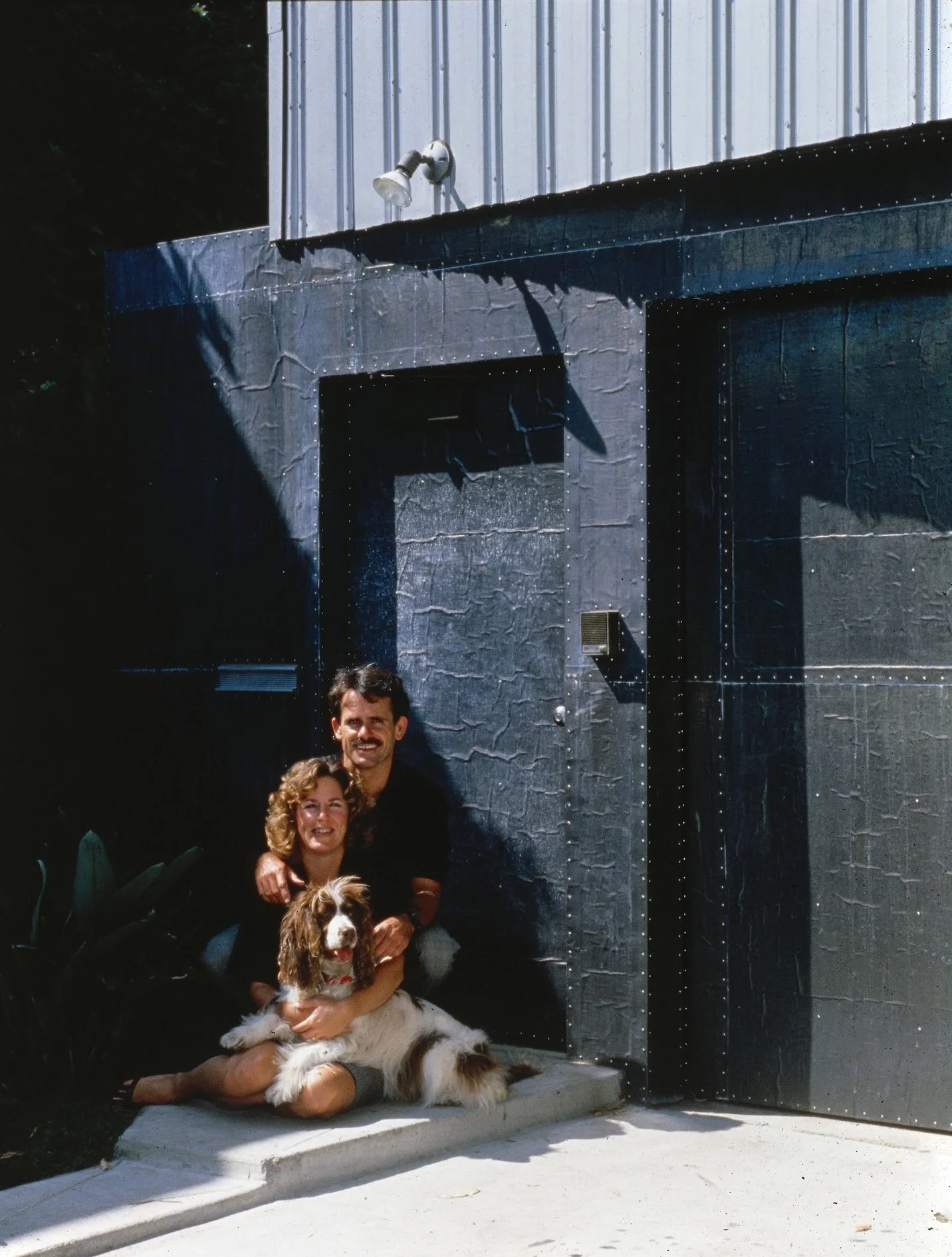
Jay and Ellen McCafferty with their dog Matter in front of their home in San Pedro, 1985.
1976–2019: Teaching at Harbor College
McCafferty holds a long-term position at Los Angeles Harbor College in Wilmington, California, where he teaches from 1976 until his retirement in 2019. At Harbor College, he serves as an associate professor of art and head of the Art Department, teaching art appreciation and ceramics for decades.
Ellen speaks highly of McCafferty’s passion for teaching:
“He loved teaching. Jay was really a conductor of energy—he recognized energy, and his greatest gift was helping people unlock who they were and become their best selves.”
1976–1983: Grapestake Gallery, San Francisco
Between 1976 and 1983, McCafferty maintains a strong relationship with Grapestake Gallery in San Francisco, California. Founded in 1974 by siblings Ursula Gropper and Thomas V. Meyer, Grapestake Gallery—active until 1984—is a pioneering public art space dedicated to showcasing California artists.
During this period, McCafferty holds five solo exhibitions at the gallery, where he presents his solar burns. These shows are instrumental in establishing his presence within the broader California art scene.
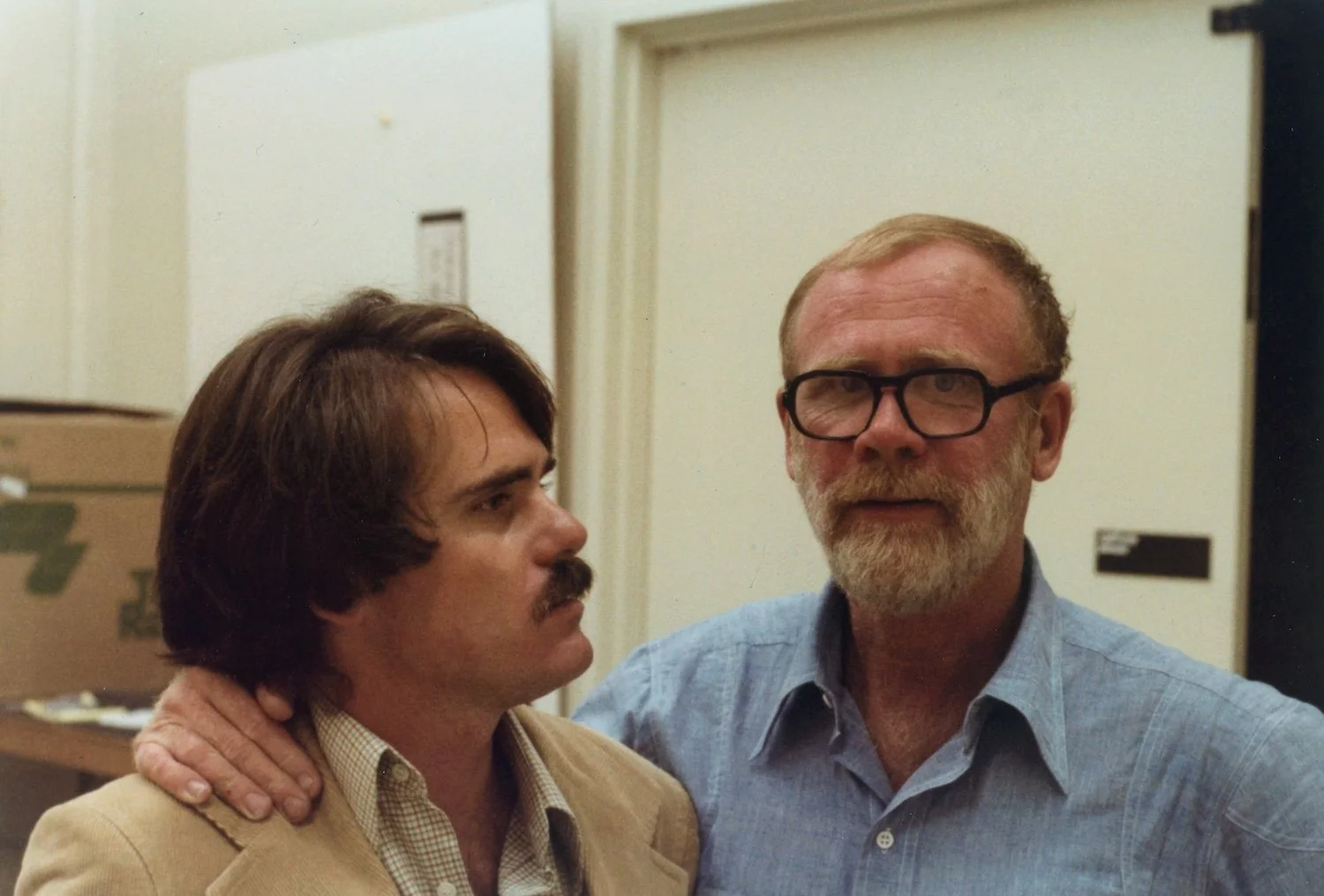
McCafferty and Tony DeLap at UC Irvine, 1972.
1978–1980: The House in San Pedro
In 1977, McCafferty purchases a lot in an eclectic neighborhood in San Pedro, overlooking the industrial sprawl of the nearby port. He and Ellen begin the construction of a house there and in 1980 they move in, shortly after getting married.
Designed by architect Coy Howard, the house design captures the interaction between domestic space and its industrial surroundings, where cranes, shipping containers, and ocean vessels dominate the horizon.
The house is later recognized by Charles Moore in his 1984 guide The City Observed: Los Angeles, and featured in the 2013 Getty Research Institute’s book Overdrive. L.A. Constructs the Future 1940-1990, among other publications.
Ellen observes that she and McCafferty “spoke the same language in aesthetics.” They share a deep appreciation for design and held remarkably similar tastes—aesthetics plays a central role in their creative vision.
1979: “Roman Numerals” at Cirrus Gallery
McCafferty presents a series of new works at Cirrus Gallery in the solo show “Roman Numerals.” Departing from his earlier burns on paper characterized by earthy tones such as ochre, beige, and brown, he begins creating controlled burn marks on black canvas. Burning through the surface reveals halos of rich colors beneath.
In a review, Melinda Wortz writes:
“The perfectly crafted and incredibly fragile surfaces, the square format and the grid composition all relate McCafferty’s new work to a tradition of painters—Reinhardt, Kelly, Stella, Irwin, to name a few—who have at some time in their careers reduced their means in order to arrive at the quintessential visual and conceptual parameters of painting . . . McCafferty’s newly obsessive commitment to craft recalls Irwin’s sensibility in his series of dot paintings, whose canvases are as carefully executed as the surfaces.”⁹
1980s
1980: Colors and collages
In 1979, McCafferty begins a new series of paintings characterized by the juxtaposition of vivid, glowing colors and hues. The works exhibit a looser composition, with the previously evident grid structure disappearing. The canvases and papers become rich in texture and possess a distinct tactile quality. Moving away from a modernist palette, McCafferty embraces vibrant colors, resulting in energetic, buoyant pieces. He also collages scraps of painted paper together to form new compositions.
1980: McCafferty and Ellen’s wedding and travelling
After several years together, Ellen and McCafferty marry in 1980. Shortly after, they travel to Paris for the opening of McCafferty’s solo exhibition at Baudoin Lebon Gallery, organized by Jean Milant of Cirrus. They turn the trip into their honeymoon, continuing a shared passion for travel.
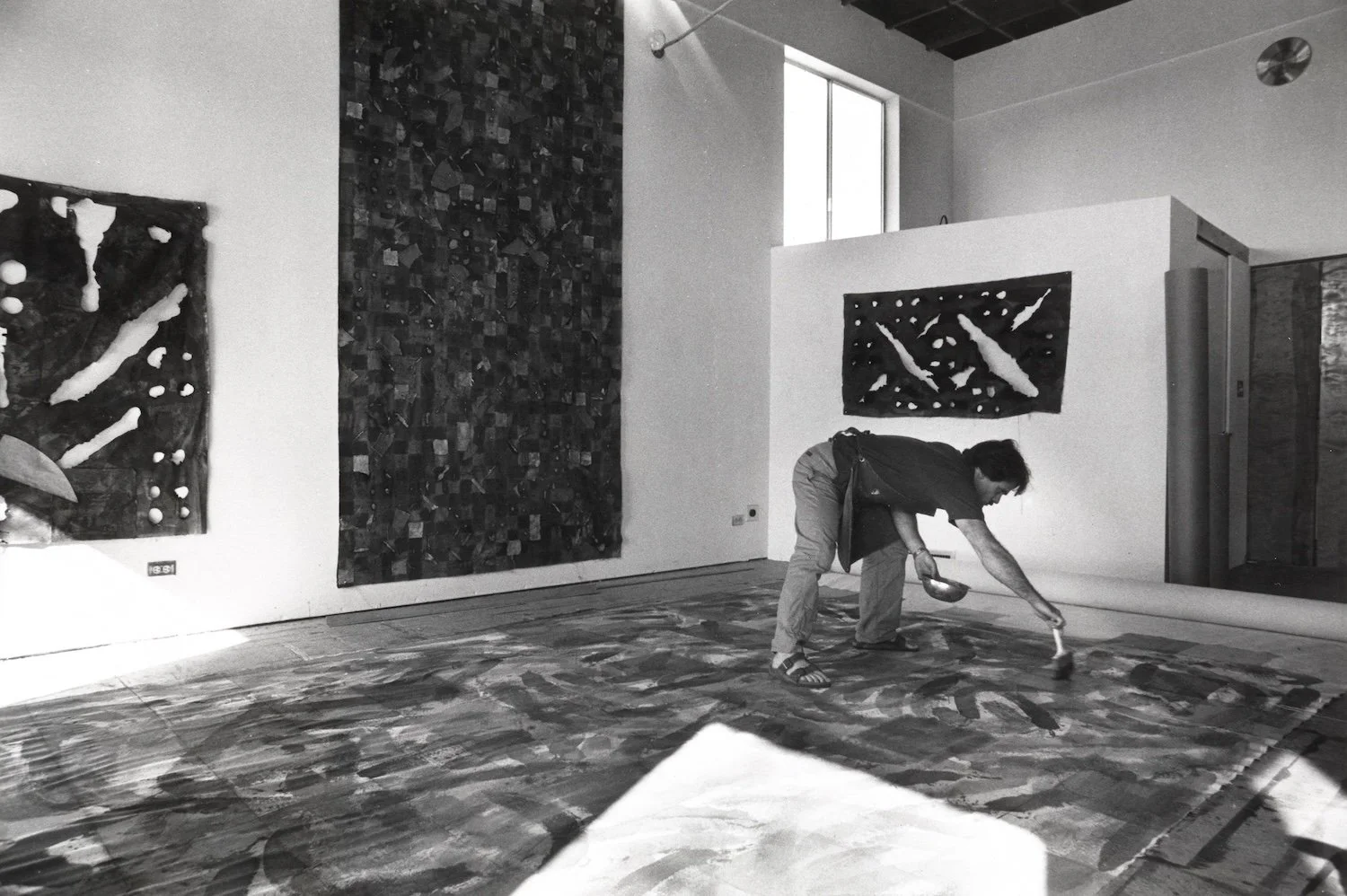
McCafferty working on “Between” in his studio, c. 1980.
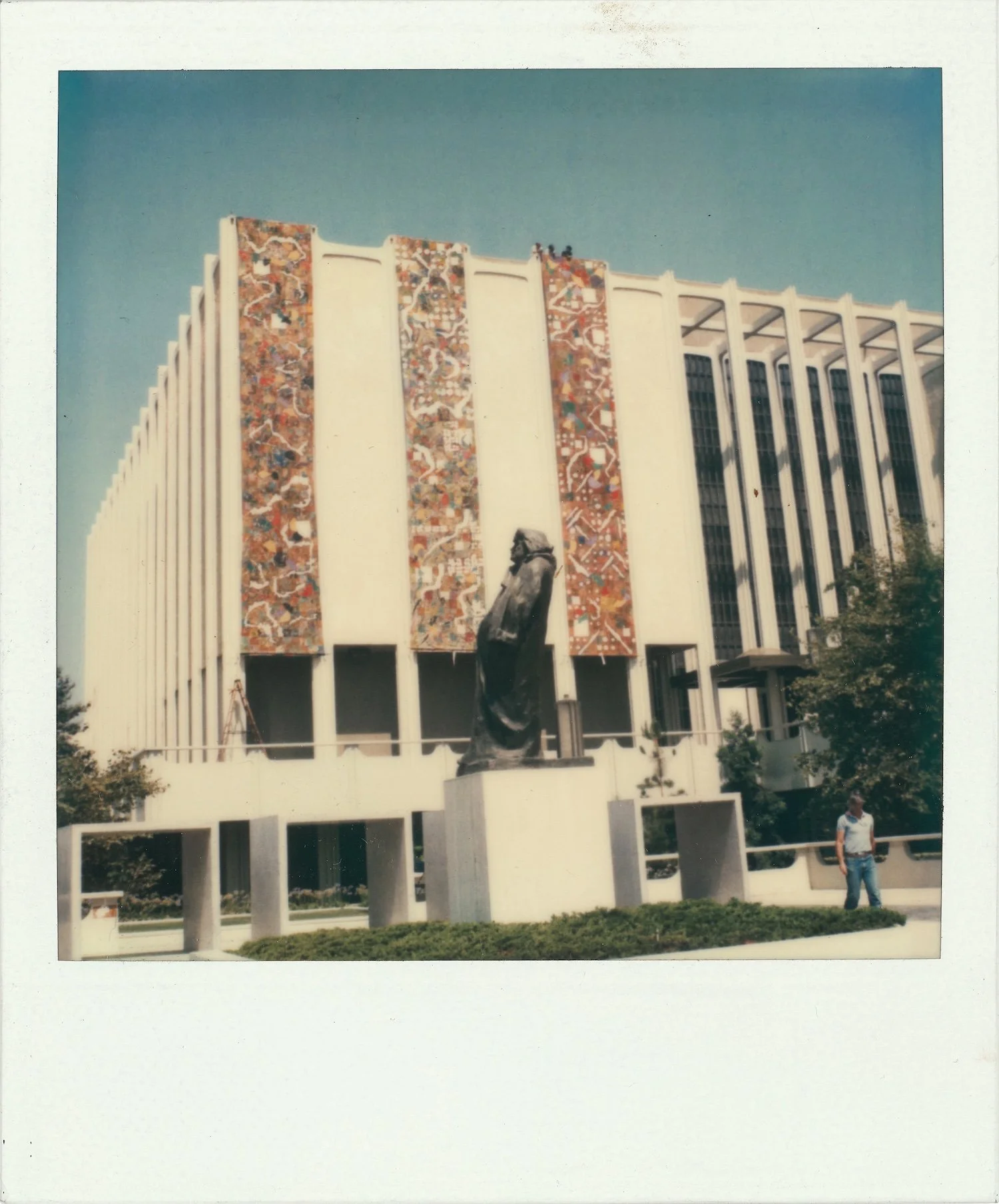
Between, 1981. Solar burns on canvas, triptych. Each banner 52 x 8 ft. Installation view on the east façade of LACMA’s Ahmanson Gallery, Los Angeles.
1981: A large-scale installation at LACMA
In 1981, for “The Museum as Site: Sixteen Projects” exhibition at Los Angeles County Museum of Art and alongside artists like Robert Irwin, Michael Asher, John Baldessari, and Chris Burden, McCafferty expands his practice into large-scale installation. He creates Between, a site-specific triptych of solar burn paintings. Each panel, eight feet wide and fifty-two feet high, is suspended on alternating bays of the sixty-foot-tall columns along the Ahmanson Gallery’s east façade.
In the show’s exhibition catalog, Stephanie Barron, curator of the show, writes: “The vigorous columnation that rises over sixty feet and repeats itself across the vast concrete expanses of the Museum could have been an impediment for artists. Instead, McCafferty chose to confront it and make the architecture work for him.”¹⁰
1986: Hollister Ranch House and Studio, Santa Barbara County
In 1986, McCafferty and Ellen’s embrace of the outdoor lifestyle leads them to purchase land in Santa Barbara County, California, where they build their second home and studio. On the Gaviota Coast, Hollister Ranch is a small community located on the scenic hills once inhabited by the Chumash tribe overlooking the ocean.
McCafferty and Ellen’s ranch spans more than 100 acres of land that allows them to envision a long-term architectural project developed over the years consisting of a house, and a large studio and display space.
Construction on the house begins and by 1988 they moved in part time. Hollister Ranch becomes their sanctuary in nature—a place of retreat, work and reflection.
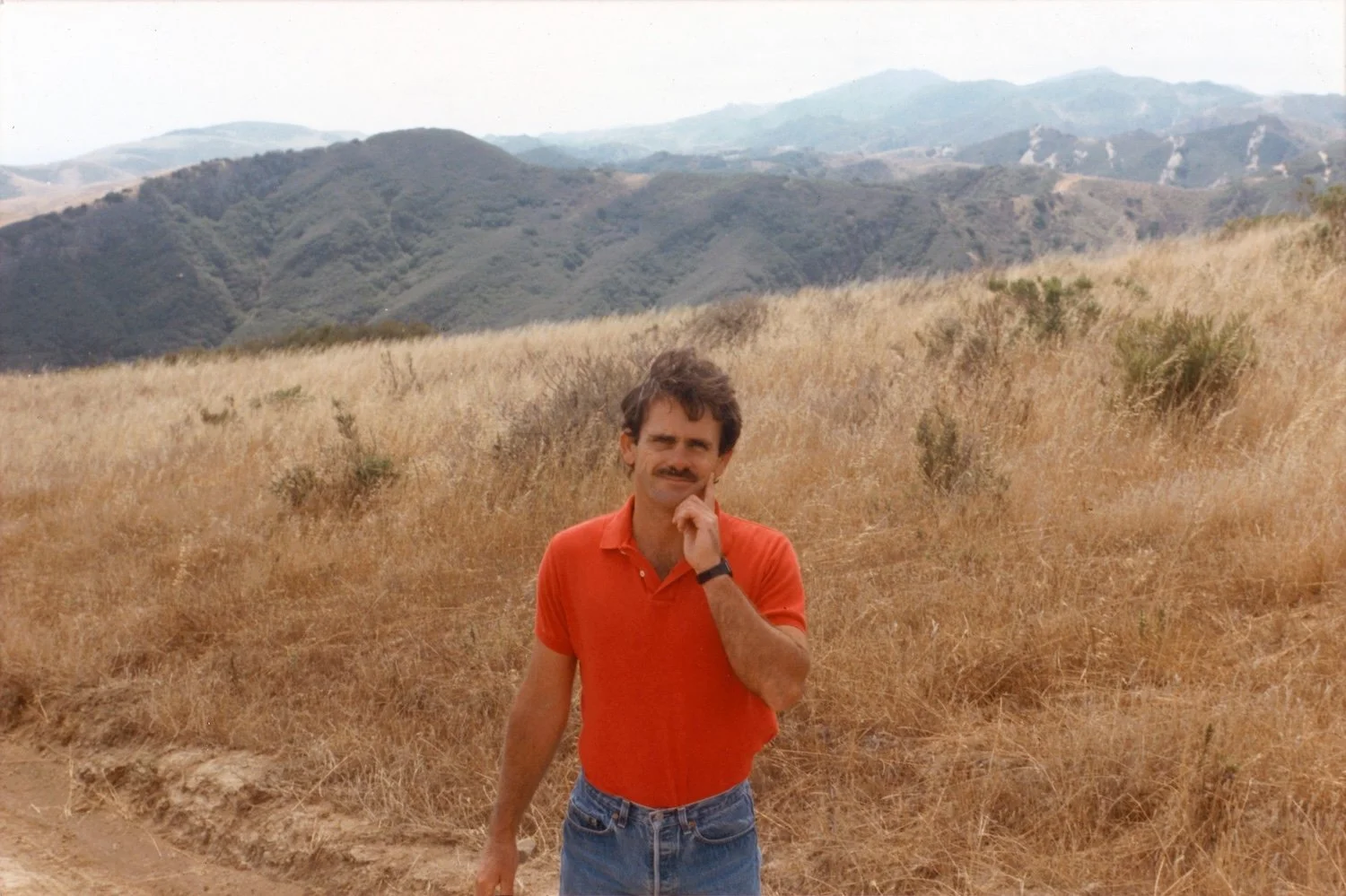
McCafferty in Hollister Ranch, 1986.
1988–2005: Collaboration with Mark Moore
Tony DeLap introduces Mark Moore to McCafferty. In 1988, McCafferty exhibits at Moore’s The Works Gallery in Long Beach, California, in a two-person show, “Michael Davis and Jay McCafferty,” marking the beginning of a collaboration with the gallery that continues until 2005.
1990s
1994: “Psalms” at Mark More Gallery, Santa Monica
McCafferty shows a new body of large-scale works at Mark Moore Gallery in Santa Monica, California, featuring a distinctive horizontal composition, marked by rows of evenly spaced burned holes and bands of painted color.
An accompanying brochure describes McCafferty as, “an individual capable of extraordinary self-discipline, commitment and continuity. Beneath his calm pursuit of a continuous vision there is also a restless, demanding character pushing this artist to seek a condition of comprehensiveness, wholeness and unity which has grown stronger and more eloquent through time.”¹¹
1995: LACMA acquisition of Cirrus Gallery collection
The Los Angeles County Museum of Art celebrates Cirrus Gallery’s legacy with the exhibition “Made in L.A.: The Prints of Cirrus Editions,” underscoring its foundational role in the development of the city’s art scene.
LACMA acquires a substantial collection of prints from Cirrus Gallery, including an extensive number of McCafferty’s works.
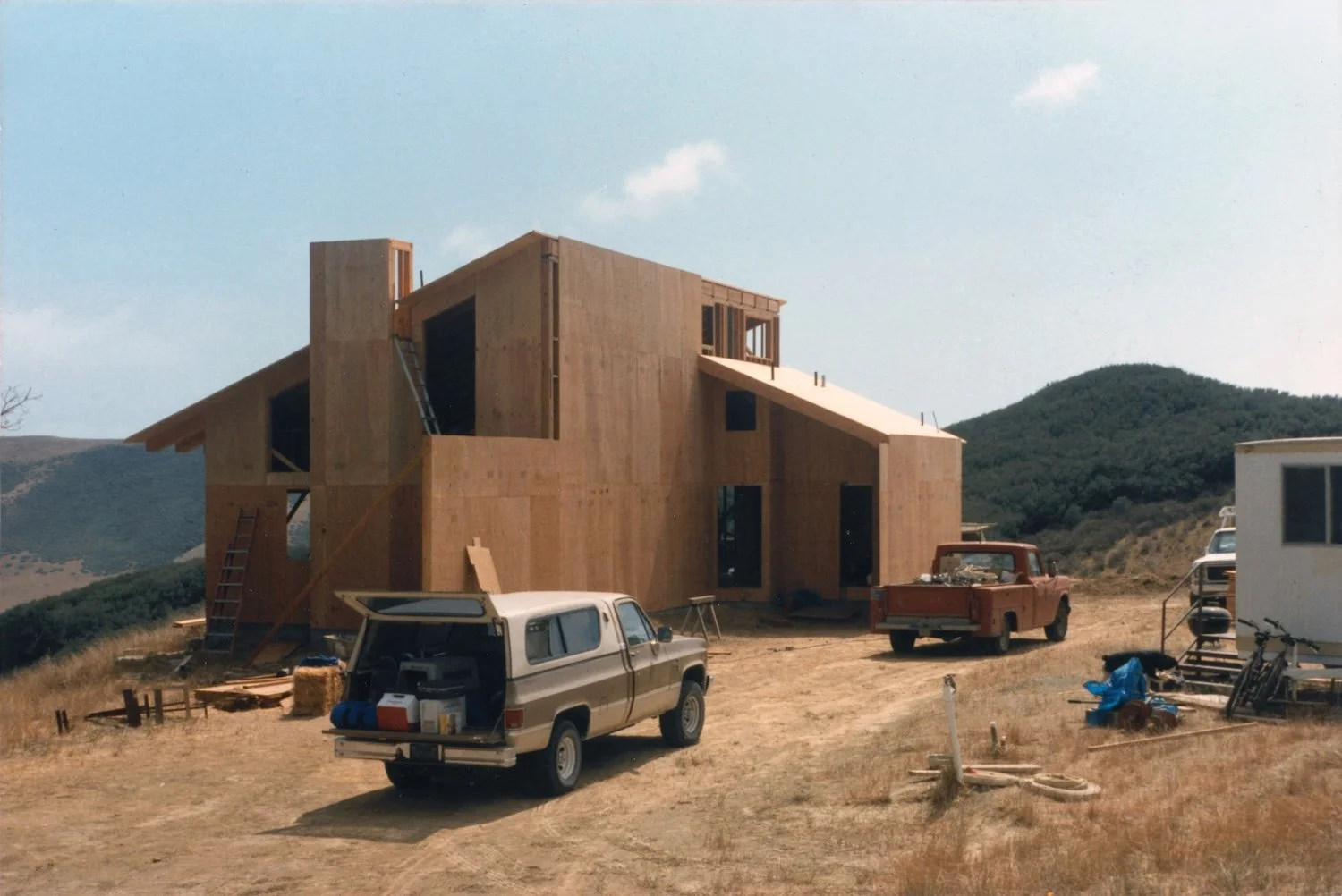
Exterior of Hollister Ranch house worksite, c. 1987.
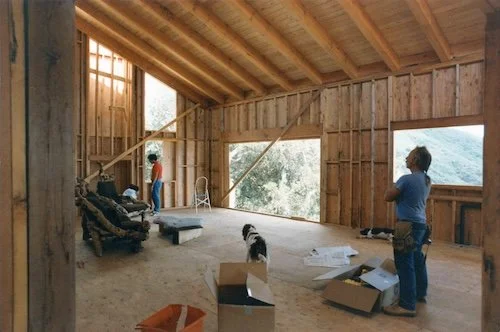
Interior of Hollister Ranch house worksite, c. 1987. McCafferty in the background (left).
2000s
2005: Large burns, cardboard pieces and the influence of Africa
McCafferty’s solar burns evolve from rhythmic, punctuated marks to vast holes and excavations. These burned-out areas disrupt the original grid, making the negative space a dominant element and ultimately dissolving the grid into a fragmented surface where absence is as significant as presence. This progression continues in the series of cardboard pieces featured in McCafferty’s 2005 solo exhibition at Gallery 478 in San Pedro.
McCafferty begins incorporating charred cardboard scraps into his work during a trip to Southern Africa that deeply influences him. Ellen recalls, “The cardboard collage pieces started in Africa. In Botswana, we stayed at a camp that was run by indigenous people. They watched him solar burning and liked him, so they began bringing him pieces of cardboard as gifts. ”That’s why he started collecting the cardboards. He burned them, brought them back in suitcases, and made paintings and collages with them.”
2005: The last show at Mark Moore Gallery
“On the Wall” is McCafferty’s last exhibition at Mark Moore; afterward, his relationship with the gallery gradually diminishes and eventually comes to an end.
The series of works he presents extends the visual language he has been refining since the late 1990s. He first applies chalk pastels to the surface of the paper, creating gradients with color variations. He then burns the paper following an orthogonal grid, continuing the process until, in many areas, the paper is completely consumed.
2008: “California Video” at the Getty Museum
The J. Paul Getty Museum, Los Angeles, presents ”California Video,” a landmark exhibition and the first major historical survey of video art in California. Curated by Glenn Phillips, Chief Curator and Head of Modern and Contemporary Collections at the Getty Research Institute, the project begins in 2006 following the Getty’s acquisition of the Long Beach Museum of Art video archive.
The Getty Research Institute currently houses McCafferty’s complete video archive.
2010s
2010: “L.A. Raising SoCal Artists Before 1980”
The California International Arts Foundation publishes L.A. Rising. SoCal Artists Before 1980. The comprehensive book, edited by Lyn Kienholz and featuring McCafferty among many other artists, captures a snapshot of the Southern California art scene between 1940 and 1980.¹²
2012: “Best Kept Secret: UC Irvine” at the Laguna Art Museum
“Best Kept Secret: UC Irvine,” curated by Grace Kook-Anderson at the Laguna Art Museum in Laguna Beach, California, marks the first major recognition of UC Irvine’s often overlooked role in West Coast art. The show acknowledges the university’s central role in shaping a generation of forward-thinking artists at the intersection of conceptualism, minimalism, and performance art between 1964 and 1971 in Southern California.
2012: “OC Collects” at the Orange County Museum of Art
For the 50th anniversary of the Orange County Museum of Art in Costa Mesa, California, Chief Curator Dan Cameron and Director Dennis Szakacs organize “OC Collects.” The show is a significant survey of works by forty-seven artists, drawn from local private collections of modern and contemporary art.
Ann and Bob Myers lend McCafferty’s work, Merge with Dust (1989), for the exhibition. Longtime admirers of his art, the Myerses follow McCafferty’s career and collect his work for over two decades.
2014: Onset of the disease
McCafferty is diagnosed with a skin cancer malignancy. He undergoes surgery, and for a time, the cancer appears to be under control.
The same year, McCafferty and Ellen invite architect Coy Howard, a close friend and longtime collaborator who previously designed their San Pedro home in 1980, to design the studio at Hollister Ranch. Completed in 2020 after four years of work, the project is a deeply collaborative process between McCafferty and Howard. The resulting compound—comprising a studio, gallery space, and guest house—is carefully integrated into the landscape, merging interior and exterior in a way that echoes McCafferty’s artistic vision and Howard’s architectural philosophy.
2017: Return of the disease
The cancer returns in a more aggressive form. McCafferty undergoes several surgeries and begins immunotherapy treatment.
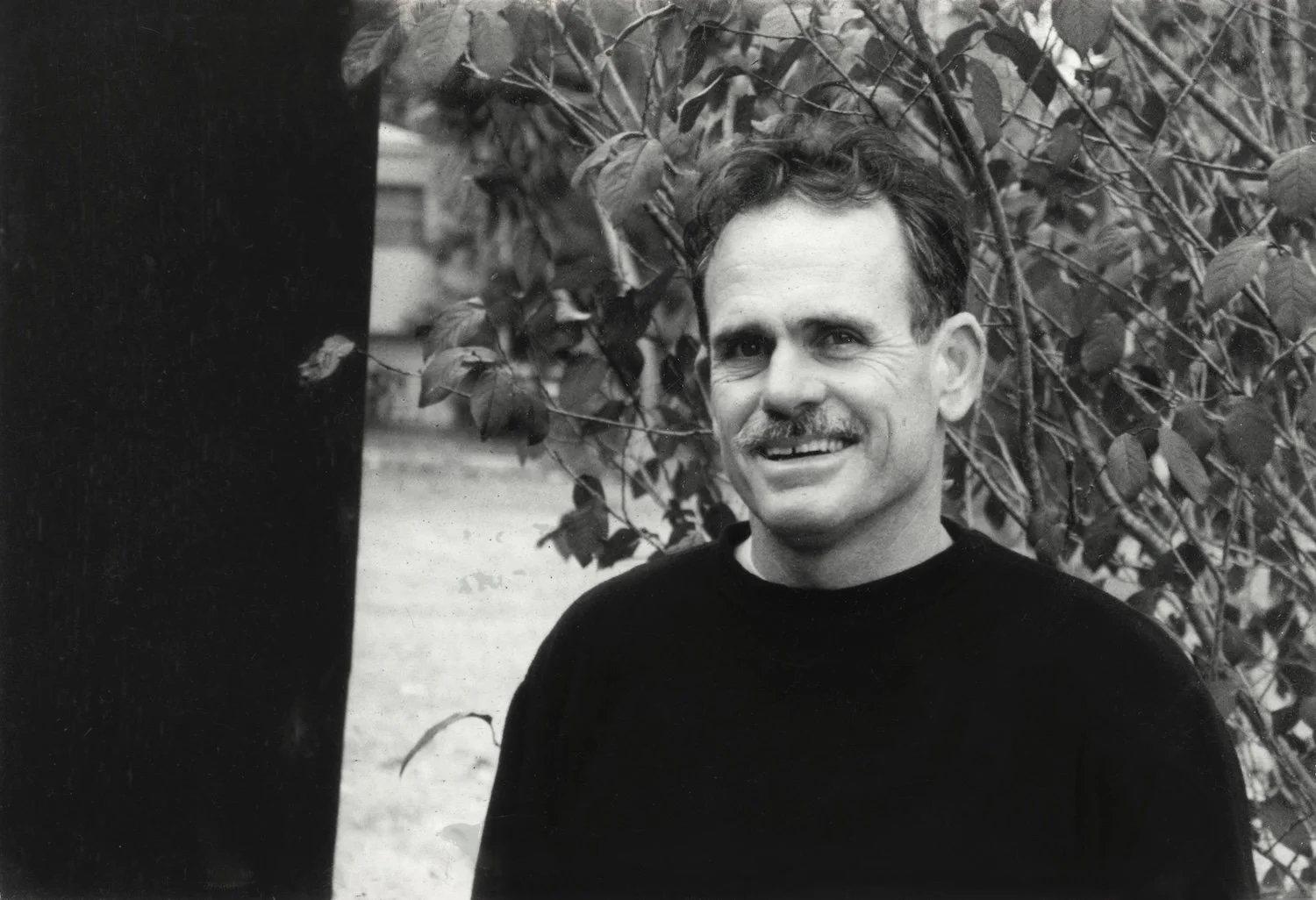
Jay McCafferty, c. 1990s.
2020s
2019–2021: The late years
After retiring from Harbor College in 2019, McCafferty and Ellen spend much of their time at Hollister Ranch, where they remain during the COVID-19 pandemic. Ellen recalls, “Jay was determined to see his studio at Hollister Ranch completed, and he even enjoyed working in it a few times before he passed away in March 2021.”
In his final years, the Ranch becomes a haven of inspiration, creativity, and peace, a place where he continues to create and exhibit until the end of his life. He eventually succumbs to metastatic melanoma.
-
¹Susan C. Larsen, Jay McCafferty’s Roman Numerals (Los Angeles: Cirrus Gallery, 1979), pamphlet.
²Jay McCafferty, Press release of the solo show Roman Numerals, Cirrus Gallery, Los Angeles, 1979.
³Melinda Wortz, “Collaborating with Nature,” Artweek, no. 10 (March 17, 1979), review.
⁴Melinda Wortz, review of the show Jay McCafferty: Videotapes and Books, Long Beach Museum of Art, Artweek, April 27, 1974.⁵“Photoworks,” Cirrus Gallery, Los Angeles, 1977.
Solo exhibition.⁶Andrea Joki, “Jay McCafferty: Solar Burns,” essay for Cirrus Gallery, 1975.
⁷Sandy Ballatore, “Jay McCafferty: Solar Burns at Cirrus Gallery”, Artweek, November 1975, review of the show.
⁸Melinda Worts, “Jay McCafferty: “Videotapes and Books,” Artweek, April 27, 1974. Review of the show at the Long Beach Museum of Art, Long Beach, CA.
⁹Melinda Wortz, “Collaborating with Nature,” Artweek, no. 10 (March 17, 1979), review.
¹⁰Stephanie Barron, The Museum as Site: Sixteen Projects. Exhibition catalog. Los Angeles: Los Angeles County Museum of Art, 1981.
¹¹Psalms. Exhibition brochure. Santa Monica, CA: Mark Moore Gallery, 1994.
¹²Lyn Kienholz, ed., L.A. Rising: SoCal Artists Before 1980 (Los Angeles: California International Arts Foundation, 2010).